What Are the Worst Mistakes When Buying a Resin Printer?
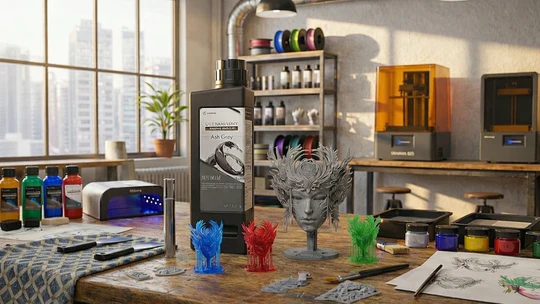
A resin 3d printer produces stunningly detailed models, but buying the wrong equipment inevitably wastes substantial money and valuable time. First-time buyers frequently chase misleading specifications or skip the critical technical research shaping their entire desktop printing experience completely.
These costly hardware mistakes remain entirely avoidable once you understand exactly what technical elements matter. Below is a practical guide highlighting the worst buying errors, determining whether your chosen resin 3d printer truly delivers excellent long-term manufacturing value.
Chasing Specs Over Reality
Desktop resin printers vary significantly in their optical design and specific curing methods. Judging a complex machine by merely one headline specification without completely understanding real-world print quality impacts prevents you from finding the best 3d printer.
The Resolution Trap
Manufacturers constantly advertise ultra-fine pixel sizes, but raw XY resolution alone never dictates actual print quality. Crucial optical uniformity, proper light collimation, and advanced anti-aliasing algorithms significantly shape how much usable microscopic detail reaches each completely cured liquid layer.
| Metric Focus | Marketing Claim | Actual Hardware Impact |
|---|---|---|
| Screen Resolution | 8K or 12K panels | High detail ceiling |
| Physical Pixel Size | Rarely mentioned | True physical accuracy |
| Internal Lighting | Basic LED arrays | Uneven edge curing |
Optical Calibration Matters
Before buying, always carefully check independent macro photography from reliable third-party hardware reviews. A well-built resin 3d printer featuring thirty-micron pixels and perfectly calibrated optics easily outperforms machines listing finer pixels but shipping with noticeably poorer light distribution.
Choosing the Right Technology
LCD, DLP, and SLA curing technologies operate differently, carrying distinct trade-offs regarding operational speed, equipment cost, and surface finish. Selecting the ideal best 3d printer firmly starts with understanding which specific ultraviolet curing method accurately matches your daily workflow.
Understanding these fundamental hardware differences prevents you from purchasing a completely mismatched system. Every successful desktop manufacturing laboratory relies heavily on pairing the correct underlying projection technology with the appropriate functional photopolymer materials for optimal daily structural output.
Ignoring Hidden Ecosystem Costs
Finding a highly capable best 3d printer fundamentally represents only half the complex desktop manufacturing equation today. Material selection and mandatory post-processing routines are where enthusiastic buyers drastically underestimate both operational complexity and ongoing financial costs, leading to incredibly poor output.
Strict Material Compatibility
Not every liquid photopolymer works reliably across every single hardware platform currently available. Crucial exposure settings, fluid viscosity, and precise curing behavior must accurately match the specific hardware’s light source and internal motion system perfectly for a completely successful structural build.
Always prioritize a robust resin 3d printer that officially ships with fully validated material-profile combinations. Mismatched liquids constantly cause frustrating print failures and rapidly accelerate destructive wear on critical consumable parts like masking screens, adding unexpected hidden replacement costs.
Essential Post-Processing Gear
Every successful liquid print requires immediate chemical washing to remove hazardous uncured material, followed by dedicated UV curing for final mechanical strength. Skipping essential post-processing leads to highly tacky surfaces, severe dimensional warping, or brittle structural parts that degrade rapidly over time.
Budget carefully for mandatory functional essentials before ordering your initial hardware setup. You fundamentally need a dedicated wash-and-cure processing station, powerful cleaning solvents like industrial isopropyl alcohol, and proper room ventilation for completely safe daily printing laboratory operation continuously.
Buying Hardware on Price Alone
Finding the reliable best 3d printer requires looking well past the lowest initial retail sticker price. A cheap resin 3d printer frequently costs significantly more over its operational lifetime through constant LCD screen replacements, poor film durability, and consistently low print success.
Instead of comparing upfront retail costs, calculate the actual financial cost per successfully printed physical part. Machines offering higher mechanical reliability, longer-lasting industrial consumables, and responsive technical support consistently deliver significantly better long-term value than the absolute cheapest hardware available.
Conclusion
Buying a reliable resin 3d printer does not need to remain a risky financial gamble. Focus heavily on verified mechanical print quality over misleading raw specifications, carefully choose validated material ecosystems, and accurately account for total ongoing ownership costs beforehand.
These practical steps effectively separate a highly satisfying desktop printing equipment purchase from a painfully costly lesson. Take time to research each hardware option thoroughly, diligently evaluate the complete ecosystem surrounding it, and finding the best 3d printer becomes perfectly clear.


